Deductions for insufficient notice

A notice period is an important time at the end of a person’s employment. It is the period of time between an employee handing in their notice and their official last day of work. It gives employers time to prepare for the change, including recruiting a replacement or making alternate staffing arrangements. Employees can use the time to finalise any outstanding matters and prepare a handover.
While the Fair Work Act 2009 (Cth) (Act) sets out minimum periods of notice when an employer wants to terminate the employment of an employee – it doesn’t provide for similar notice requirements when an employee resigns. However, awards, enterprise agreements and contracts of employment typically set out how much notice an employee needs to give when they resign. Unfortunately, sometimes employees leave without giving any notice or don’t work out their whole notice period. The FAQs below answer the enquiries we commonly receive when this occurs.
What do we need to pay an employee who resigns without giving notice or gives insufficient notice?
An employee is entitled to be paid for any outstanding hours worked up to their last day of employment (wages). They are also entitled to be paid any accumulated annual leave (and leave loading if applicable) and long service leave (if any) (accrued leave). The employee does not need to be paid for any part of the notice period not worked unless the employee is on paid leave for that time.
Can we deduct money from an employee's final pay if they don't give notice or sufficient notice?
In all cases, deductions can only be made from wages – not from payments of accrued leave paid out on termination of employment.
Any deduction from wages must be in accordance with the Act or it will be an unlawful deduction (and civil penalties may ultimately be payable).
The rules differ depending on whether the employee is covered by an award or enterprise agreement or is award-free.
Award-covered employees
Under the Act, a deduction from wages can be made if it is authorised by an award. Most modern awards allow the deduction of one week’s wages if an employee (aged 18 and over) does not give the required notice. Provided the deduction is made in compliance with the relevant award, separate authorisation from the employee is not required to make the deduction.
Agreement-covered employees
Under the Act, a deduction from wages is permitted if it is authorised by the employee in accordance with an enterprise agreement. Many enterprise agreements include a provision allowing for deductions from pay if an employee does not give the requisite notice. Employers should comply with the procedure set out in the enterprise agreement for the employee to authorise the deduction.
Award-free employees
For employees not covered by a modern award or enterprise agreement, a deduction from wages can only be made if the specific amount of the deduction is authorised in writing by the employee and the deduction is principally for the employee’s benefit. The employee may withdraw their authorisation in writing at any time.
All employees
Whether an employee is covered by an award, enterprise agreement or neither, any deduction from wages because of insufficient notice should not be unreasonable in the circumstances. The Act provides that a term of an award, enterprise agreement or contract of employment has no effect to the extent it permits an employer to make an unreasonable deduction if the deduction directly or indirectly benefits the employer. Unlike awards which limit the amount that can be deducted to one or two weeks’ pay, some enterprise agreements permit an amount equal to the whole notice period to be deducted if the required notice is not given. What is reasonable should be considered on a case-by-case basis and given most employers pay fortnightly, in practice there is unlikely to be outstanding wages of significant amounts due on termination of employment.
Want to learn more? Take a look through our latest updates
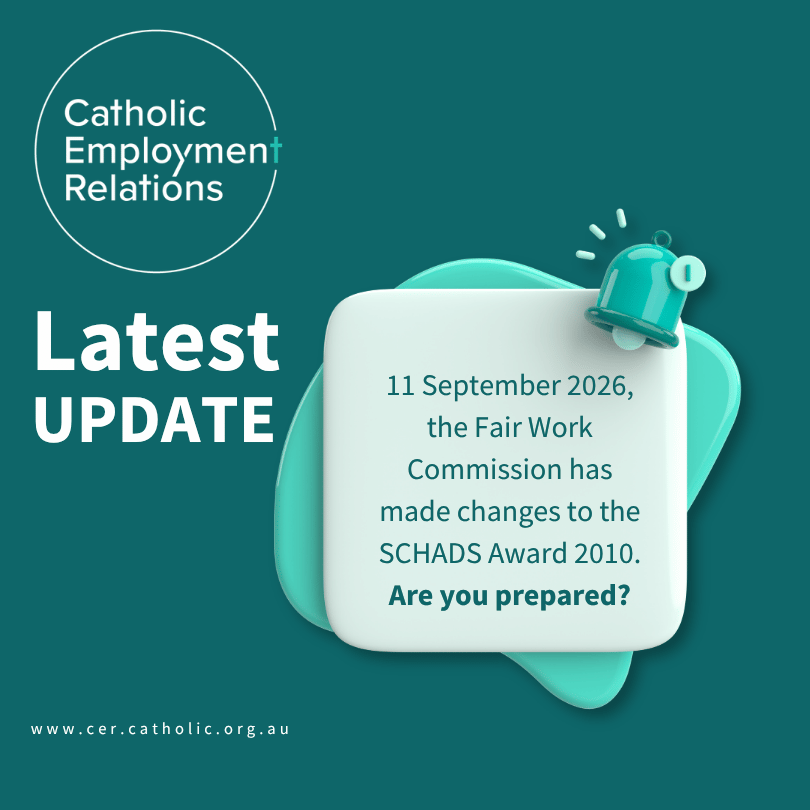
The Fair Work Commission has confirmed significant changes, including an interim pay increase for eligible disability home care workers from 1 December 2026 and a new classification structure from 1 October 2027.
These changes will have important implications for workforce planning, remuneration and compliance.

The vehicle allowance under the Aged Care Award and the Social, Community, Home Care and Disability Services (SCHCADS) Award has temporarily increased from $1.01 to $1.05 per km. This increase applies for 6 months from the first full pay period on or after 1 September 2026.
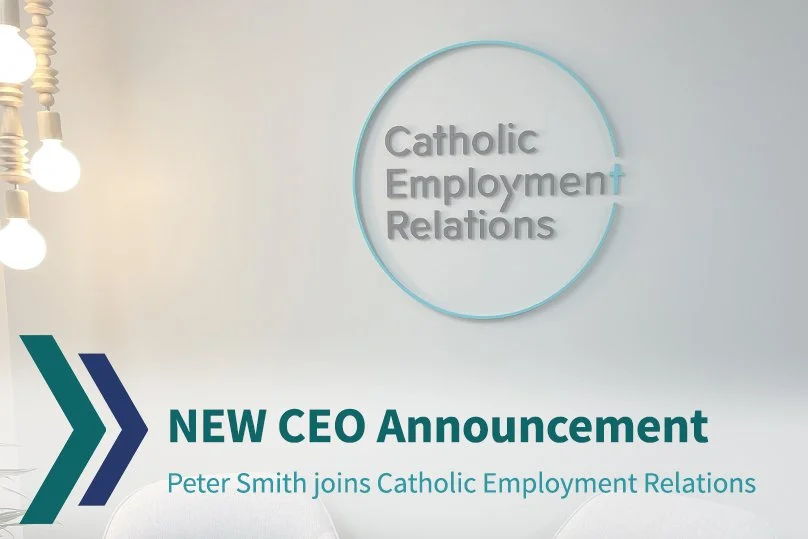
We are pleased to announce the appointment of Mr Peter Smith as Chief Executive Officer of Catholic Employment Relations Limited, effective 7 April 2026. Peter will assume the role of Authorised Principal and join the Board of Catholic Employment Relations Limited on 26 May 2026.

A Practical Guide for Employers. Employers in all industries are grappling with the challenge of a new technology that is fundamentally changing the way work is performed and how resources are allocated.

By understanding the legal and pastoral dimensions of Catholic education, CER assists schools and dioceses to manage employment matters confidently, lawfully and in a manner consistent with the mission of the Church.

The Fair Work Commission’s 2025 Annual Wage Review has increased the National Minimum Wage and modern award minimum rates by 3.5%. Employers must check the updated Modern Awards Pay Database, review pay rates and update payroll systems.

NSW’s new Portable Long Service Leave scheme for the Community Services Sector starts 1 July 2025, allowing workers to accrue long service leave across different employers. Employers must register within one month of commencement, and employees can qualify for leave after 7 years of service in the sector.


From 26 August 2024, changes to the definition of “employee” will affect how independent contractors are classified. The key change reinstates the multi-factorial test, requiring employers to consider the overall substance of the working relationship, not just the contract terms. This applies to all current and future relationships.

Starting August 26, 2024, employees in Australia will have a new legal right to disconnect from work-related contact outside of working hours. Under Section 333M of the Fair Work Act 2009, employees can refuse to respond to after-hours messages from employers. This change is aimed at improving work-life balance. Learn how these new rights will impact your organisation.

From 1 July 2024, all modern awards and enterprise agreements must include delegates' rights terms due to the Fair Work Legislation Amendment (Closing Loopholes) Act 2023. This change ensures workplace delegates have legislative rights to communicate with members and access workplace facilities.

Managing underperformance in the workplace involves clear communication of responsibilities, accurate identification of performance issues, and supportive consultation with employees. Proactively managing underperformance fosters a culture of continuous improvement, enhancing productivity and organisational success.

Fair Work Commission announces 3.75% wage increase - National Minimum Wage and modern award minimum wages. To address gender undervaluation, including in the areas of early childhood education, disability home care, and social and community services.

Reasonable management action must be lawful, proportionate, procedurally fair, transparent and justified. It includes actions like performance management and disciplinary measures. Proper application of these principles helps reduce legal risks, such as claims for psychological injury and unfair dismissal and can lower staff turnover.

The Anti-Discrimination and Human Rights Legislation Amendment (Respect at Work) Act 2022 (Cth) (Respect at Work Act) was introduced to implement six recommendations from the Respect@Work Report

The landscape of casual employment in Australia has undergone significant changes following the High Court's landmark decision in Workpac Ltd v Rossato & Ors [2021] HCA 23. The recently enacted Closing Loopholes No 2 Act, introduces a legislative definition of casual employment effective from late August. Employers are advised to reassess their casual workforce within the six-month transition period to ensure compliance.

As remote work becomes increasingly prevalent, the boundaries between home and work life have become more fluid. With many employees finding themselves engaged in work tasks outside of traditional office hours, the need for clear guidelines regarding work-life balance has never been more pressing. Read more about what you need to know.

A recent decision by the Fair Work Commission highlights the significance of proper procedure even when there are valid grounds for dismissal. In a case involving allegations of harassment, the Commission found that the employer's procedural deficiencies outweighed the valid reasons for termination. Despite the employee's inappropriate behavior, the employer's failure to manage the conflict adequately and provide procedural fairness led to an unfair dismissal verdict.

The responsibility lies with the employer to provide evidence and justification for their refusal of a flexible work request. Employers should keep this in mind during negotiations or when declining requests, aiming to find common ground whenever feasible to prevent unnecessary conflict.

The right to disconnect, introduced through the Fair Work Legislation Amendment (Closing Loopholes No.2) Bill 2023, grants Australian employees the entitlement to ignore work-related communication outside of working hours, except when deemed unreasonable. This amendment seeks to balance work-life boundaries by allowing employees to disengage after work hours, unless specific criteria for reasonableness are met.

In the aftermath of the COVID-19 lockdowns, the education sector grapples with the concept of flexibility. The push for workplace flexibility aligns with the 2023 Senate Select Committee on Work and Care's recommendations, citing positive impacts on gender equality globally. However, the unique nature of the education sector underscores the necessity for comprehensive engagement with school communities to address diverse needs and ensure successful implementation of any significant changes.

Fixed term contracts (including maximum term and temporary contracts), entered into on or after 6 December 2023, are limited to a maximum period of two years and/or one renewal, including previous periods of employment, unless limited exceptions apply.

CER will soon be integrated into Catholic Schools NSW (CSNSW), joining the Legal and Risk team, and marking the end of the CER entity. The merger aims to better meet the employment law needs of Catholic organisations in education, social services and religious sectors.

Learn how to effectively manage performance issues with employees, from distinguishing between underperformance and misconduct to implementing performance improvement plans for better results.

This article explores the concept of reasonable additional hours under the Fair Work Act, covering the rights of employees to refuse such hours and the corresponding compensation. It delves into considerations for determining reasonableness, payment obligations, and potential future changes regarding the "right to disconnect" outside of work hours.

Effective from 1 July 2023, the Fair Work Commission has announced a 5.75% increase in the National Minimum Wage and Modern Award pay rates, with the NMW actually increasing by 8.6%. Ensure that your award-covered employees' wages reflect the new pay increase and stay compliant with the updated regulations.

A recent decision by the Industrial Relations Commission highlights the challenges schools face when dealing with child protection and fairness to employees accused of serious misconduct. This article explores a case involving a male teacher in NSW who was dismissed for alleged sexual misconduct involving a student. CER can assist with advice and representation.

Learn how to navigate difficult conversations and provide constructive feedback in the workplace to avoid negative consequences such as resentment, low morale and decreased productivity. Reframing difficult conversations as constructive conversations promotes curiosity, understanding and resolution. Creating a psychologically safe workplace environment, characterised by warmth, vulnerability and open dialogue, fosters confidence and enhances communication skills, leading to a more productive and engaged team.

Employers will have new obligations and requirements from June 6 2023, regarding requests for flexible working arrangements and unpaid parental leave extensions, necessitating a review of current practices, discussions with employees, consideration of alternative changes and update to current procedures. Please seek guidance to ensure compliance with the new obligations.

There are amendments to flexible working arrangements and unpaid parental leave extensions, which will come into effect on 6 June 2023. Employers must be aware of their new obligations and requirements and take action to review and update their practices and policies to ensure compliance with the amendments. This article details the actions that employers should take to prepare for the new requirements.